










































































































































10 Weight Loss Tips for Women Over 40 at Home
Author: RVLNSV PRASAD
Updated On: September 2026
About Us
Author Bio
Editorial Policy
Contact Us
Quick Answer
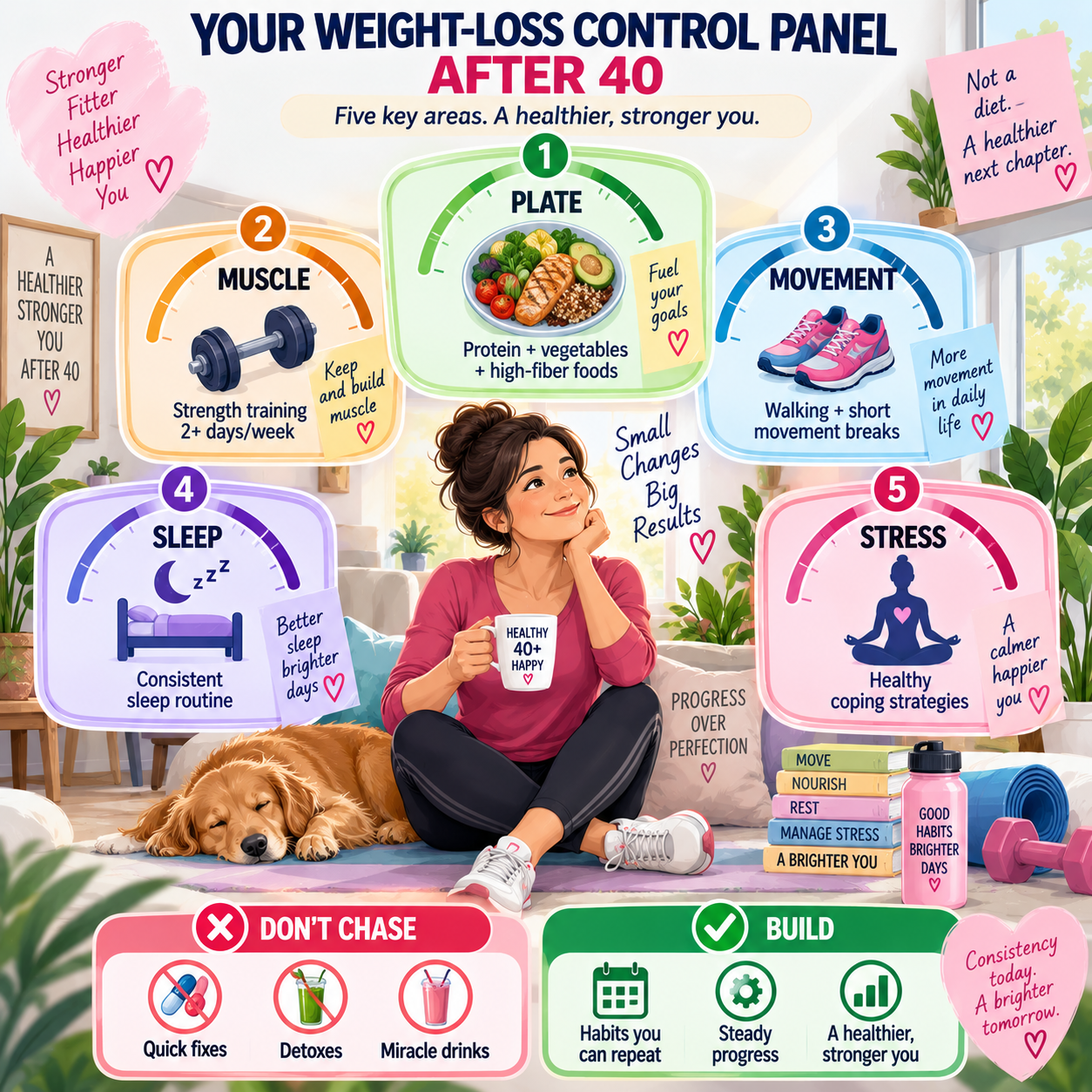
The most effective weight loss tips for women over 40 at home are not based on extreme diets, detox drinks, or one special food. A sustainable approach combines nutritious meals, adequate protein and fiber, regular walking or other aerobic activity, strength training, sufficient sleep, stress management, and realistic portion control.
Weight management during the 40s can be influenced by aging, activity levels, muscle mass, sleep, genetics, medications, and hormonal changes associated with perimenopause and menopause.
The important point is that weight loss after 40 for women is possible, but the strategy should focus on preserving health and muscle while creating sustainable habits rather than chasing rapid results.
Key Takeaways
- Weight loss for women over 40 does not require an extreme diet.
- Protein-rich foods can help support muscle while you work toward a healthy weight.
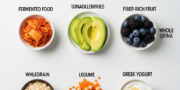
- Vegetables, fruits, whole grains, legumes, and other high-fiber foods can make meals more filling.
- Strength training is especially useful for maintaining muscle as you age.
- Walking is an easy way to increase daily activity without needing a gym.
- Short periods of movement can be accumulated throughout the day.
- Sleep and stress deserve attention because healthy weight management involves more than food and exercise.
- Menopause can change body composition and fat distribution, but it is not a reason to give up on healthy weight management.
- A person’s ideal weight-management approach depends on health, medications, activity level, food preferences, and medical history.
- If weight gain is unexplained or persistent despite consistent lifestyle changes, professional medical advice can be appropriate.
Introduction
Reaching your 40s does not mean that healthy weight management has to become impossible. However, many women notice that strategies that once worked easily no longer produce the same results.
The reason is not simply that your body suddenly “stops burning calories.” Weight is influenced by many factors, including age, muscle mass, activity, food intake, sleep, genetics, medications, and hormonal changes.
For women moving through perimenopause and menopause, hormonal changes can also affect body composition and where fat is stored. Lower estrogen after menopause may contribute to changes in body-fat distribution, while aging, reduced activity, and loss of muscle mass can also influence weight.
That is why the best weight loss tips for women over 40 at home should not promise a quick transformation.
Instead, they should help women build a routine that fits real life.
You may have a full-time job, children, family responsibilities, limited time, a small exercise space, or no access to a gym. A successful plan therefore needs to be practical enough to repeat.
This guide focuses on sustainable weight management rather than crash dieting. It covers food, protein, fiber, strength training, walking, sleep, stress, menopause, common mistakes, and simple exercises that can be done at home.
The goal is not perfection.
The goal is to create habits that can still work six months or one year from now.
Why Weight Loss Can Feel Different After 40
Weight does not depend on age alone.
However, several changes that commonly occur during midlife can make weight management more challenging.
Muscle mass tends to decline with aging unless it is actively maintained. Less muscle can affect physical function and energy needs. At the same time, activity levels may decrease because of work, family responsibilities, injury, or lifestyle changes.
Menopause and perimenopause can add another layer. Hormonal changes can influence body-fat distribution, while sleep disturbances and changes in daily routines may indirectly affect eating and activity.
This is important because blaming yourself for every change on the scale is not helpful.
A better question is
What factors can I realistically improve?
You may not be able to control your age or genetics, but you can work on strength, activity, food quality, portions, sleep, and daily routines.
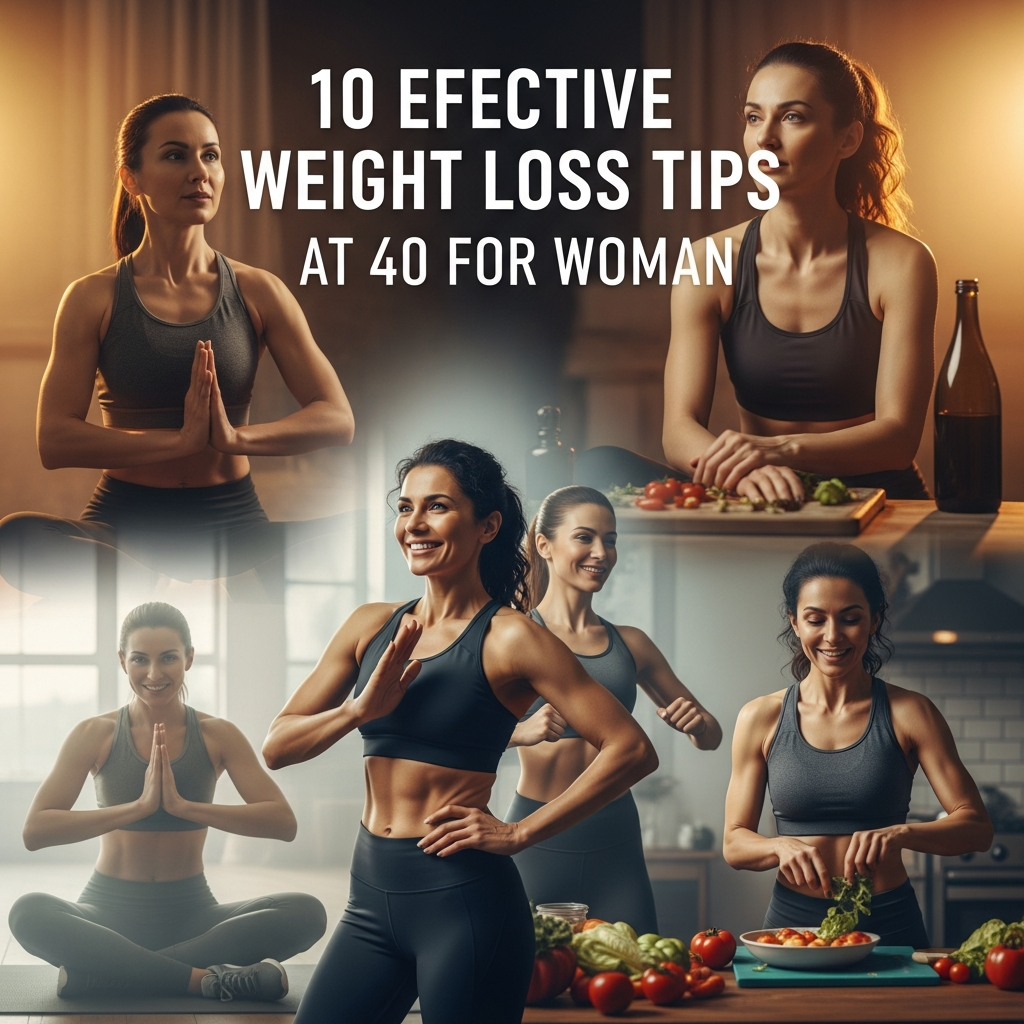
10 Effective Weight Loss Tips for Women Over 40
1. Make Protein a Regular Part of Your Meals
Protein is important for maintaining and building muscle.
This becomes particularly relevant during weight loss because losing weight can involve some loss of lean tissue as well as body fat.
Good everyday protein choices include:
- eggs
- fish
- chicken
- Greek yogurt or other suitable yogurt
- milk or fortified alternatives
- lentils
- beans
- chickpeas
- tofu
- soy foods
- nuts and seeds
You do not need to eat enormous amounts of protein.
Instead, try to include a protein source regularly across your meals.
For example, breakfast could include eggs or yogurt, lunch could include dal or beans, and dinner could include fish, chicken, tofu, or another suitable protein.
Protein requirements vary according to body size, activity, age, health, and individual circumstances, so there is no single amount that every woman over 40 should consume.
A 2024 randomized trial involving postmenopausal women found that resistance training improved measures related to muscle and body composition, supporting the value of resistance exercise during this stage of life. PubMed evidence
The larger lesson is simple: weight loss should not be viewed only as losing kilograms. Preserving strength and muscle matters too.
2. Increase Fiber Without Making Your Diet Complicated
Fiber can help make meals more satisfying while adding important nutrients.
Useful sources include:
- vegetables
- fruits
- oats
- barley
- beans
- lentils
- chickpeas
- whole grains
- nuts
- seeds
Instead of suddenly changing your entire diet, make one meal more fiber-rich.
For example, add vegetables and dal to lunch, choose oats at breakfast, or include fruit with yogurt.
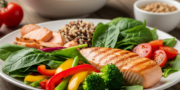
A practical plate can contain a source of protein, vegetables or fruit, a high-fibre carbohydrate, and a suitable amount of healthy fat.
This is much easier to maintain than following a highly restrictive diet.
3. Use Portion Awareness Instead of Extreme Restriction
Healthy foods can still contribute substantial calories when eaten in very large portions.
That does not mean you need to weigh every ingredient.
Instead, become more aware of portions.
Try serving your meal on a normal-sized plate, eating slowly, and checking whether you are still hungry before taking more.
You can also reduce the frequency of very calorie-dense foods without declaring them completely forbidden.
This approach can be more sustainable than an all-or-nothing diet.
The aim is not to eat as little as possible.
The aim is to create an eating pattern that provides adequate nutrition while supporting your individual weight-management goals.
4. Walk More Throughout the Day
Walking is one of the most accessible exercises for women over 40.
You do not need special equipment, a membership, or complicated programming.
A 10-minute walk before work, another after lunch, and another in the evening can add meaningful movement to your day.
Current U.S. physical-activity guidance recommends 150 to 300 minutes of moderate-intensity aerobic activity each week for adults, along with muscle-strengthening activity on at least two days each week.
Importantly, physical activity does not have to happen in one long session.
Short periods of movement can be accumulated throughout the day.
The American Heart Association also emphasizes that physical activity provides important cardiovascular and metabolic benefits beyond changes in body weight. 2026 AHA evidence
This matters because exercise should not be judged only by what the bathroom scale says.
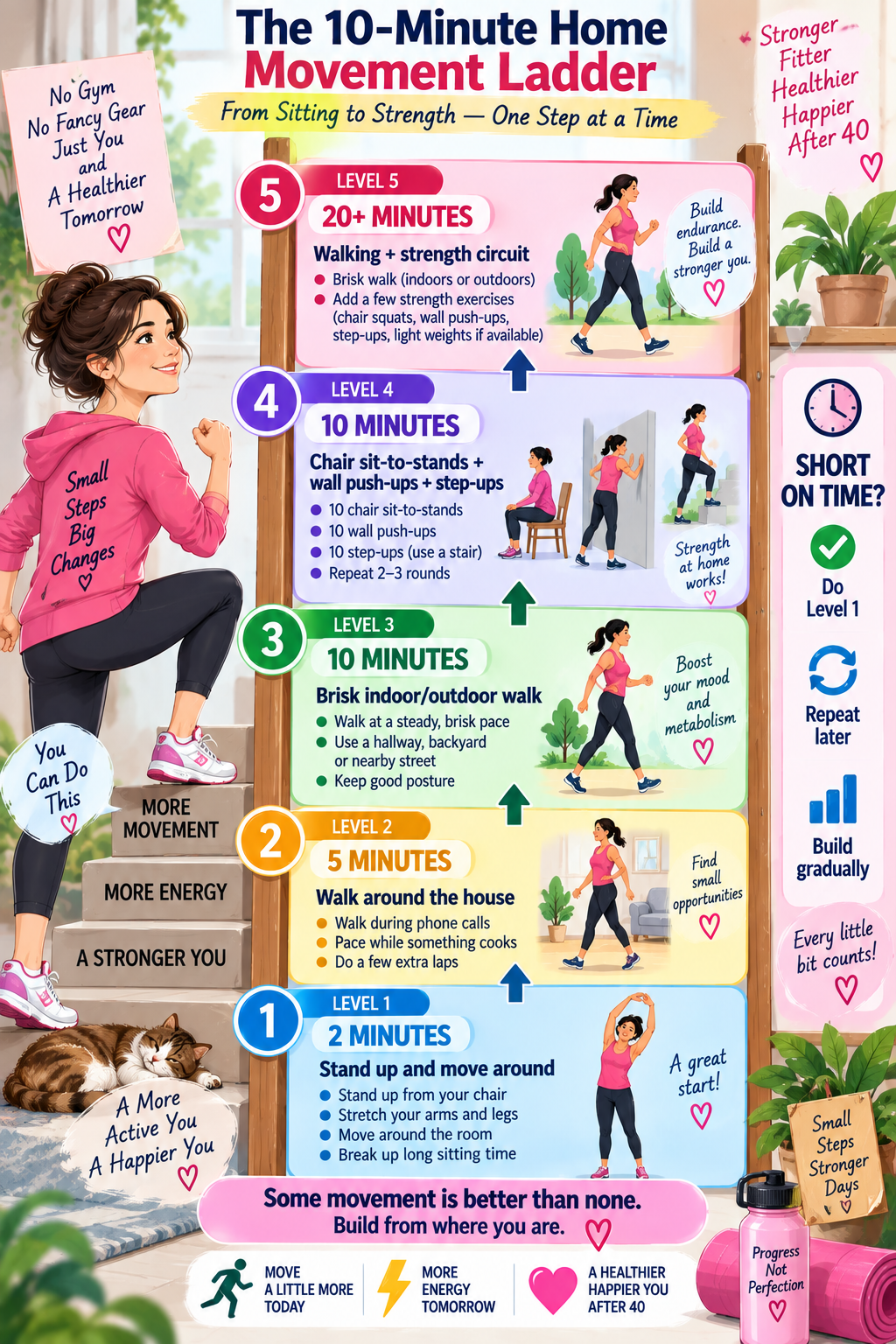
5. Add Strength Training Two or More Days a Week
This is one of the most important exercises for women over 40 to prioritize.
Strength training can help maintain or build muscle and improve physical function.
You do not necessarily need a gym.
You can start with:
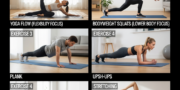
- chair sit-to-stands
- wall push-ups
- resistance-band rows
- supported squats
- step-ups
- light household objects used safely as resistance
The current physical-activity guidelines recommend muscle-strengthening activity at least two days per week.
The American Heart Association’s 2026 scientific statement also highlights the importance of considering lean-mass preservation during weight management and the role of resistance training. AHA evidence
This is one reason I would not build a weight-loss plan around cardio alone.
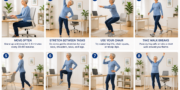
6. Try the “Household Circuit.”
Here is a simple exercise routine that does not require a gym.
Perform each movement for a comfortable number of repetitions:
Chair sit-to-stand → wall push-up → supported step-up → resistance-band row → slow marching
Rest as needed and repeat according to your fitness level.
The purpose is not to exhaust yourself.
The purpose is to train several basic movement patterns using equipment you may already have at home.
If you have not exercised recently, begin with one round and gradually build up.
This is particularly useful for people who say:
“I don’t have time to exercise.”
A short routine can be easier to fit into a busy day than a full gym session.
7. Use “Movement Snacks.”
Here is another simple strategy that many traditional weight-loss articles overlook.
Instead of thinking:
“I need one complete workout.”
Think:
“Where can I add five minutes of movement?”
Try:
- five minutes of walking after breakfast
- five minutes of marching while waiting for food
- five minutes of mobility during a work break
- five minutes of walking during a phone call
- five minutes of gentle movement before dinner
These short periods do not replace your overall activity target, but they can help reduce prolonged sitting and make movement a normal part of the day.
8. Build a Sleep Routine
Weight management is not only about calories and exercise.
Sleep deserves attention too.
Poor sleep can make healthy routines more difficult by affecting energy, mood and the ability to stay physically active.
Women in midlife may also experience sleep disruption related to menopause symptoms.
Rather than focusing only on a specific bedtime number, create a consistent routine.
Try keeping a regular sleep schedule, reducing unnecessary screen exposure close to bedtime and making your bedroom comfortable and quiet.
If persistent insomnia, loud snoring, gasping during sleep, or severe daytime sleepiness is present, talk with a healthcare professional rather than assuming the problem is simply lack of discipline.
The National Institute on Aging provides guidance on sleep and healthy aging.
9. Manage Stress Without Using Food as the Main Coping Strategy
Stress can make weight management harder.
Some people respond to stress by eating more frequently, choosing highly palatable foods or abandoning their normal routines.
The solution is not to eliminate stress completely.
Instead, create alternative responses.
For example:
Stress → five-minute walk → breathing exercise → phone a friend → return to the task
This is not about having perfect self-control.
It is about creating another option before automatically reaching for food.
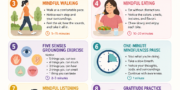
Simple activities such as walking, stretching, breathing exercises, journaling, or talking with someone you trust may help you manage difficult moments.
10. Choose Consistency Over Perfection
A healthy eating plan does not need to be perfect every day.
- You may eat differently during a family celebration.
- You may miss a workout.
- You may travel.
- You may have a stressful week.
None of these events automatically ruin your progress.
The important skill is returning to your routine.
Instead of thinking:
“I failed my diet.”
Think:
“That meal was different from my usual routine, and I can return to my normal habits at the next meal.”
This mindset can prevent one difficult day from turning into an abandoned plan.
A Simple At-Home Exercise Plan for Women Over 40
| Day | Activity |
|---|---|
| Monday | 15–20 minute brisk walk + chair sit-to-stands |
| Tuesday | Wall push-ups + resistance-band rows + easy walking |
| Wednesday | Two or three short walks during the day |
| Thursday | Supported squats + step-ups + walking |
| Friday | 20–30 minute comfortable or brisk walk |
| Saturday | Full-body household circuit |
| Sunday | Gentle walking, mobility, and recovery |
This is an example rather than a personalized exercise prescription.
If you are currently inactive, starting with smaller amounts is reasonable and can be built up gradually.
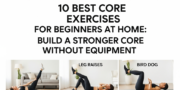
Three Easy Exercises You Can Do at Home
Chair Sit-to-Stand
Place a stable chair behind you.
Stand with your feet approximately hip-width apart.
Lower yourself toward the chair with control, then stand again.
Use your hands for support if needed.
This movement trains the legs and hips and closely resembles everyday activities such as getting up from a chair.
Wall Push-Up
Stand facing a wall and place your hands against it.
Bend your elbows as you move your body toward the wall, then push yourself away.
Adjust the distance from the wall to make the movement easier or harder.
This is a useful starting point for someone who cannot comfortably perform floor push-ups.
Supported Step-Up
Use a stable, secure step or low platform.
Hold a railing or other stable support if necessary.
Step up slowly, then step down with control.
Start with a low height and a small number of repetitions.
Stop if you experience pain, dizziness, chest discomfort, or unusual shortness of breath.
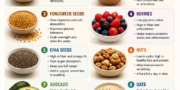
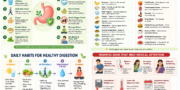
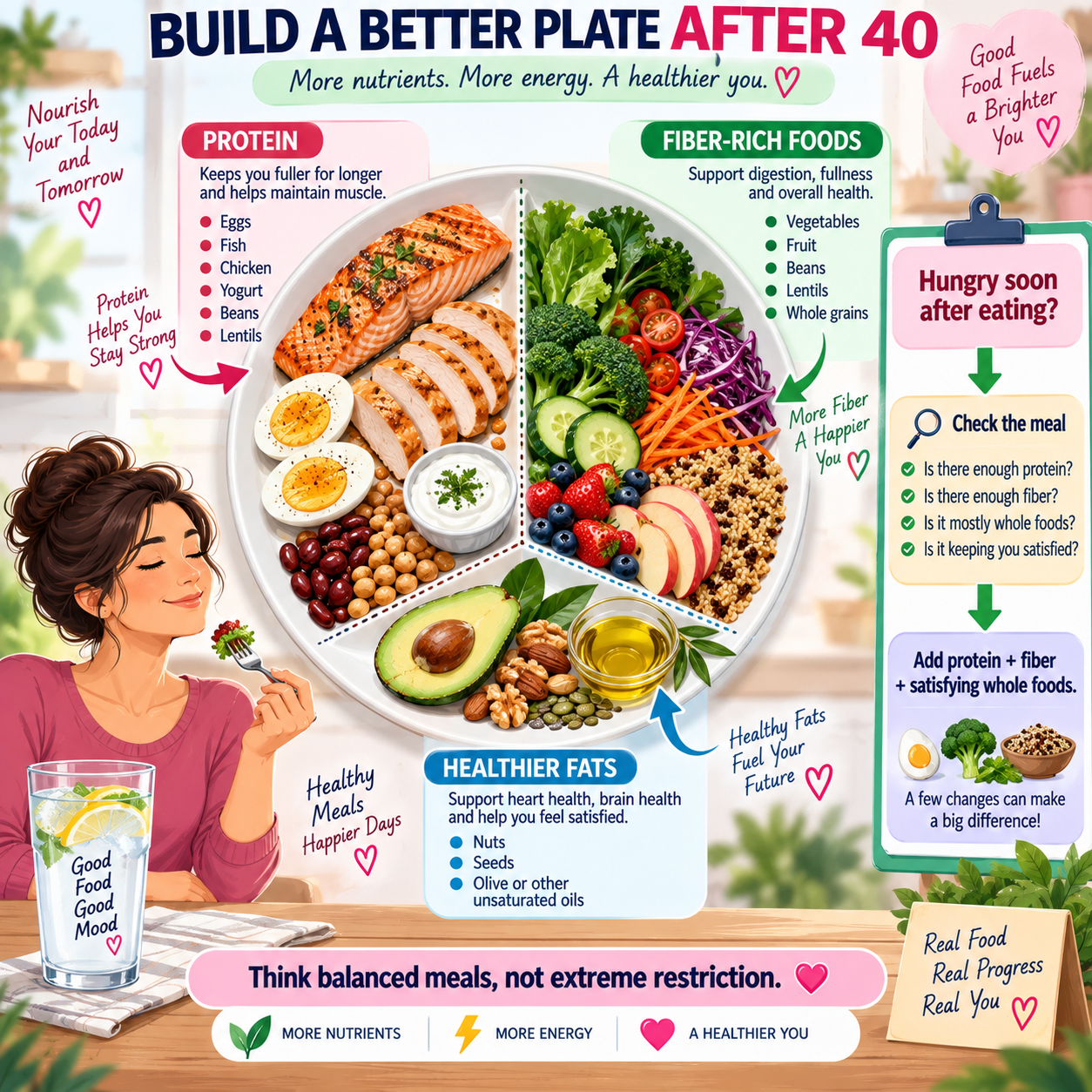
A Simple Food Framework for Healthy Weight Loss After 40
You do not necessarily need a complicated diet plan.
Think about building meals around four components:
| Component | Examples |
|---|---|
| Protein | Eggs, fish, chicken, yogurt, beans, lentils, tofu |
| Fiber-rich foods | Vegetables, fruits, oats, barley, legumes |
| Carbohydrate | Whole grains, potatoes, brown rice, whole-grain roti |
| Healthy fats | Nuts, seeds, avocado, olive oil |
The important word is pattern.
One food does not determine whether your diet is healthy.
Your overall choices across weeks and months matter much more.
What About Menopause and Weight Gain?
Menopause is an important part of the conversation about weight loss for women over 40, but it should not be treated as the sole explanation for every change in weight.
During the menopausal transition, estrogen levels change, body-fat distribution may shift and sleep can become more difficult.
At the same time, aging, reduced physical activity, changes in diet, loss of muscle and other factors continue to influence weight.
This means you do not need to choose between saying:
“It is all hormones.”
and
“It is all calories.”
Real life can involve both biological and behavioral factors.
Can You Lose Belly Fat After 40?
You cannot reliably choose where your body loses fat first.
Doing hundreds of abdominal exercises does not guarantee that abdominal fat will disappear specifically.
A better strategy is to improve overall body composition through:
- regular physical activity
- resistance training
- appropriate food intake
- adequate protein
- sufficient sleep
- stress management
- long-term consistency
As overall body fat decreases, abdominal fat may also decrease, although the pattern and speed vary from person to person.
If you notice a rapid or unexplained increase in abdominal size, especially with other symptoms, discuss it with a healthcare professional rather than assuming it is normal weight gain.
What About Lemon Water, Green Tea, and Apple Cider Vinegar?
These foods and beverages are often promoted online as weight-loss shortcuts.
That claim is too strong.
Lemon water can be a refreshing way to drink water, especially when it helps replace sugary drinks.
Unsweetened green tea can fit into a healthy diet.
Apple cider vinegar may be included in some diets, but it should not be presented as a substitute for evidence-based weight management.
The same principle applies to “fat-burning” drinks, detox beverages, and supplements.
A food can be healthy without being a weight-loss treatment.
This distinction is especially important because readers should not delay effective lifestyle changes or professional care while searching for a miracle solution.
What If You Are Eating Well but Still Gaining Weight?
This is an important question that is often ignored.
If your weight continues to increase despite consistent lifestyle changes, consider whether something else may be contributing.
Possible factors can include:
- medications
- sleep problems
- menopause-related changes
- thyroid disorders
- insulin resistance or diabetes
- reduced activity
- changes in portion sizes
- emotional eating
- fluid retention
- other medical conditions
This does not mean that every woman with weight gain has a medical disorder.
It simply means that persistent or unexplained changes deserve a broader assessment.
A healthcare professional can review your symptoms, medications, medical history, and appropriate tests.
People-First Insight: Make Healthy Choices Easier
Weight-loss advice often assumes that everyone has unlimited time, money, energy, and access to exercise facilities.
Real life is different.
People work, care for families, travel, and manage household responsibilities. People also have different budgets and may not have access to gyms or convenient exercise facilities.
That is why a good plan should reduce friction.
Instead of:
“Exercise for one hour every day.”
Try:
“Walk for 10 minutes after lunch and add two short strength sessions this week.”
Instead of:
“Completely change your diet.”
Try:
“Add a protein source and a vegetable to one meal today.”
Instead of:
“Never eat your favorite foods again.”
Try:
“Keep favorite foods occasional and build most meals around nutritious foods.”
Small changes are easier to repeat.
Repeated habits can become more valuable than an impressive plan that lasts only a few days.
My Personal Experience and Perspective
From my experience observing how people approach weight loss, one of the biggest problems is often not a lack of information.
It is trying too many things at once.
One week the focus may be on eliminating carbohydrates.
The next week it may be a detox drink.
After that, someone may attempt a very restrictive exercise routine.
When the plan becomes difficult to maintain, the person may conclude that weight loss is impossible.
A more practical approach is to simplify.
Choose a few habits that can realistically fit your life.
For example, walk regularly, include protein in meals, eat more vegetables and high-fiber foods, perform strength exercises twice a week, and work on sleep.
This is personal perspective rather than clinical evidence, but I believe the most useful weight-loss strategy is one that a person can continue when life becomes busy.
Common Mistakes Women Make When Trying to Lose Weight After 40
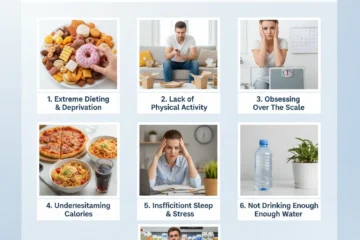
Mistake 1: Eating Far Too Little
Severely restricting food may produce short-term weight changes but can be difficult to sustain and may make it harder to meet nutritional needs.
Better: use a moderate, sustainable approach.
Mistake 2: Doing Cardio but Ignoring Strength Training
Walking and aerobic activity are valuable, but muscle-strengthening activity is also important.
Better: combine aerobic movement with resistance training.
Mistake 3: Believing Every Weight Gain Is Caused by Hormones
Hormonal changes can matter, but they are not the only factor.
Better: consider activity, food intake, sleep, muscle mass, medications, and medical conditions as well.
Mistake 4: Searching for a Fat-Burning Food
No single food can replace an overall healthy eating pattern.
Better: improve the pattern rather than chasing one ingredient.
Mistake 5: Expecting the Scale to Drop Every Week
Body weight naturally fluctuates.
Better: consider longer-term trends and other indicators such as waist measurements, fitness, strength, energy, and health markers where appropriate.
Mistake 6: Exercising Only When You Have Time for a Full Workout
Waiting for the perfect 60-minute window can result in very little movement.
Better: use short activity periods throughout the day.
Mistake 7: Comparing Your Body With Someone Else’s
Women experience aging, menopause, genetics, and body composition differently.
Better: measure progress against your own starting point.
Mistake 8: Ignoring Medical Factors
Persistent unexplained weight gain deserves attention.
Better: speak with a healthcare professional when appropriate.
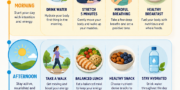
A Realistic Daily Routine
Morning
Start with a nutritious breakfast containing a protein source and a high-fiber food.
During Work
Stand up regularly and take brief walking or movement breaks.
Lunch
Build a balanced meal around protein, vegetables or fruit and a suitable high-fibre carbohydrate.
Afternoon
Take a short walk rather than remaining seated continuously.
Evening
Complete a short strength routine on designated days or take a comfortable walk.
Before Bed
Create a consistent wind-down routine and prioritize adequate sleep.
The objective is not to make every hour of the day about weight loss.
The objective is to make healthy behavior easier to repeat.
When Should You Talk With a Healthcare Professional?
Consider professional guidance if:
- You have unexplained or rapid weight gain
- You have symptoms suggesting a thyroid or metabolic problem
- You have diabetes or prediabetes
- You have high blood pressure
- You have significant obesity
- Medications may be affecting your weight
- Menopause symptoms are interfering with sleep or daily life
- You have joint, heart, or other medical problems that affect exercise
- Lifestyle changes have not produced the results you expected
- You are considering weight-loss medication
Weight-management treatment is not limited to diet and exercise.
Weight-loss medication should never be started or stopped based solely on an online article.
Frequently Asked Questions
What is the best way for a woman over 40 to lose weight?
There is no single best plan for everyone. A sustainable eating pattern, regular physical activity, resistance training, adequate sleep, and realistic portions are a strong foundation.
Can women lose weight after 40?
Yes. Weight loss is possible after 40, although the appropriate approach varies according to health, activity, food intake, genetics, medications, and life stage.
What are the best weight loss tips for women over 40 at home?
Start with manageable habits such as protein-rich meals, more vegetables and fiber, regular walking, two or more weekly strength sessions, adequate sleep and consistent portions.
Is walking enough to lose weight?
Walking can contribute to weight management and cardiovascular health. However, the amount of weight loss from physical activity alone varies.
Should women over 40 avoid carbohydrates?
Not necessarily. Whole grains, beans, lentils, fruits, and other carbohydrate-containing foods can be part of a healthy diet.
The overall quality and amount of food matter more than automatically eliminating an entire food group.
Does menopause make weight loss impossible?
No. Menopause can influence body composition and fat distribution, but healthy weight management remains possible.
Can strength training help women over 40 lose weight?
Strength training can support muscle and strength and may help improve body composition. It should generally complement rather than completely replace aerobic activity.
How much exercise should women over 40 get?
Current U.S. guidance recommends 150–300 minutes of moderate-intensity aerobic activity per week plus muscle-strengthening activity on at least two days each week. Current U.S. guidance
Someone who is currently inactive can begin with smaller amounts and gradually progress.
Does lemon water burn belly fat?
No beverage should be promoted as a proven method for specifically burning belly fat. Lemon water can be a healthy low-calorie drink, but sustainable weight management depends on the overall lifestyle pattern.
What is the best exercise for losing weight after 40?
There is no single best exercise. Walking, cycling, swimming, dancing, and other aerobic activities can help increase physical activity, while strength training helps maintain muscle and physical function.
The best activity is often one you can perform safely and consistently.
What if I cannot go to a gym?
You can walk outdoors or indoors and perform exercises such as chair sit-to-stands, wall push-ups, resistance-band exercises, and supported step-ups at home.
How quickly should I expect results?
There is no universal timeline. Weight changes depend on the starting point, food intake, activity, health, medications, and many other factors.
Focus on sustainable progress rather than expecting dramatic changes within a few days.
Author Note
I created this guide to provide practical weight loss tips for women over 40 at home without promoting extreme diets, miracle foods, or unrealistic exercise routines.
The goal is to help women understand why weight management may change during midlife and identify habits that can realistically fit into everyday life.
The information combines current health guidance with practical, people-first strategies.
Author: RVLNSV PRASAD
Medical Disclaimer
This article is provided for general educational and informational purposes only.
It is not a diagnosis, an individualized weight-loss program, or a substitute for professional medical advice.
Weight management can be affected by age, genetics, medications, menopause, sleep, medical conditions, dietary intake, physical activity, and other individual factors.
Do not start, stop, or change prescription medication based solely on this article.
If you have unexplained weight gain, significant obesity, diabetes, cardiovascular disease, thyroid disease, or another medical condition, discuss your situation with a qualified healthcare professional.
Fitness Disclaimer
The exercises described in this article are general examples and are not individualized exercise prescriptions.
Start gradually and choose movements appropriate for your current fitness level.
If you have cardiovascular disease, uncontrolled blood pressure, significant joint problems, dizziness, chest pain, unusual shortness of breath, or another medical condition, consult a healthcare professional before beginning a new exercise program.
Stop exercising and seek appropriate medical attention if you develop concerning symptoms.
Conclusion
The best weight loss tips for women over 40 at home are not based on a miracle food, detox drink, or exhausting workout.
They are based on habits that can survive real life.
Build meals around nutritious foods and adequate protein. Increase vegetables, fruits, legumes, and other fiber-rich foods. Pay attention to portions without resorting to extreme restriction. Walk regularly and add strength training at least twice a week. Make sleep a priority and develop healthier ways to manage stress.
For women experiencing perimenopause or menopause, hormonal changes can influence body composition, but they are only one part of the picture. Aging, muscle mass, activity, sleep, diet, genetics, and other factors can also influence weight.
Most importantly, do not measure success only by the number on the scale.
Improved strength, better fitness, more consistent meals, better sleep, and healthier daily routines are meaningful forms of progress too.
You do not need to completely change your life tomorrow.
Start with one or two changes that you can realistically maintain.
Walk a little more. Eat a little better. Build your strength. Sleep well. Repeat.
Over time, those ordinary habits can become a powerful foundation for healthy weight management after 40.
Sources
- Menopause, estrogen, and weight changes: Office on Women’s Health — Weight Loss and Women
- 150–300 minutes of weekly activity + strength training: U.S. Physical Activity Guidelines
- Move more and sit less: Physical Activity Guidelines — Questions & Answers
- 2026 evidence on physical activity and weight management: American Heart Association — 2026 Physical Activity Scientific Statement
- 2026 research on resistance training in women across the lifespan: 2026 Systematic Review — Resistance Training in Women
- Resistance training in postmenopausal women: PubMed — Resistance Training Meta-analysis
- Protein + resistance training/body composition evidence: PubMed — Postmenopausal Women Randomized Trial
- Weight-management medication and comprehensive care: American Heart Association — Weight Management Care and Treatment
Similar articles
- 4 Week Diet Plan for Weight Loss
- Home
- 10 Best Vitamins for Women After 50 to Boost Energy and Health
- 12 Best Fat Burning Supplements Women
- 7 Strength Training Exercises for Women Over 40: A Comprehensive Guide